Dog reactive to other dogs on walks
A dog that barks and lunges at other dogs on the lead is not usually an aggressive dog. It is a dog that has no way to create distance, so it makes noise instead.
Work under threshold. Find the distance at which your dog can see another dog and still eat food, then work there and only there. Reward the look away, not the stare. Do not walk your dog into head on greetings on a tight lead, and stop apologising your way through close passes, cross the road instead.
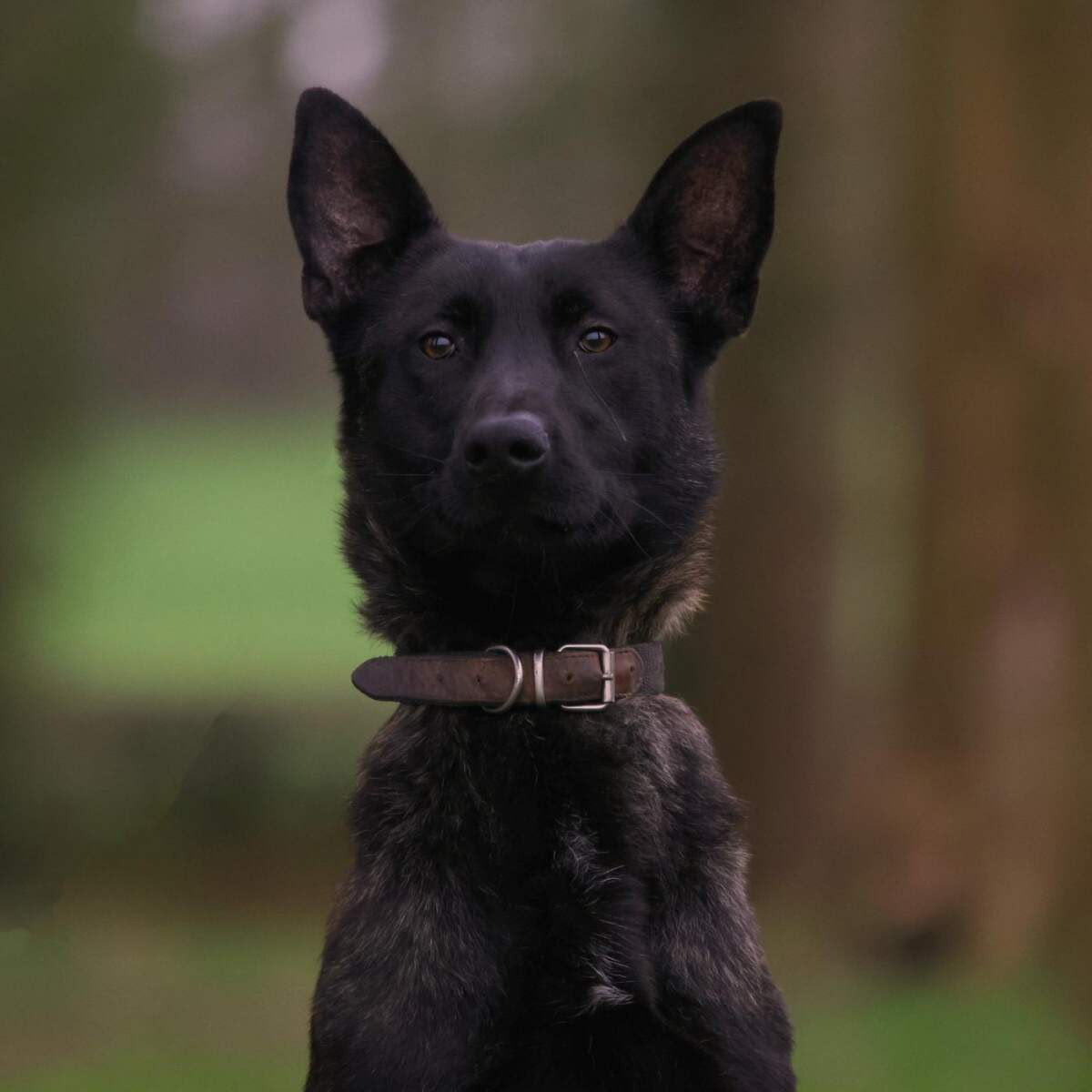
Frustration or fear, they look identical
Frustrated greeters want to get to the other dog and cannot, so they scream about it. Fearful dogs want the other dog gone. Both bark, both lunge, both embarrass you, but the training plan is different, which is why guessing rarely works.
A rough test: watch what the dog does when the other dog leaves. Relief means fear. Continued straining means frustration.
The distance rule
Every reactive dog has a distance at which it can still think. Inside it, the dog is not learning anything. Most owners work far too close because they are trying to get the walk finished rather than trying to train.
Start at the distance where your dog notices the other dog and can still take food, then close the gap by a few feet a session.
Things that make it worse
- ●Flexi leads, they remove your control at the exact moment you need it.
- ●Letting the dog stare. Staring is the rehearsal, the bark is only the finish.
- ●Head on greetings on lead. Dogs greet in arcs, not in face to face collisions.
- ●Busy parks at peak time while the dog is still learning.
When it needs a professional
If your dog has redirected onto you, injured another dog, or you have stopped walking at normal hours to avoid the problem, get hands on help. Reactivity that is being managed by avoidance tends to get narrower, not better.
Need hands on help?
Book an assessment and we will tell you honestly what we are dealing with before you spend money.
Three generations of the same family, over 8,000 dogs trained.
Common questions
Most improve enormously and walk calmly past other dogs. Whether they become a dog park dog is a different question, and honestly, many never need to be.
Reactivity is an over the top response, usually noise and movement. Aggression is intent to do damage. Only a hands on assessment can tell you reliably.
It can, because we can work the dog daily in controlled setups, but the handover matters most. You have to be able to hold the standard at home.
Related guides
Looking for training near you? See our dog training areas, our protection dog areas, or all services.