Protection dog or guard dog: the difference, and which one you need
These three terms get used as if they mean the same thing, and they do not. Buying the wrong one is expensive, sometimes dangerous and occasionally a legal problem. Here is how we separate them when a client rings.
A family protection dog lives in the home as a pet with trained protective behaviours under handler control. A guard dog is a deterrent animal, often property based, with far less emphasis on social life in a household. A security dog works with a handler in a professional setting, usually commercially. The key difference is control and context: the more the dog lives in a family, the more its stability and obedience matter than its bite.
The family protection dog
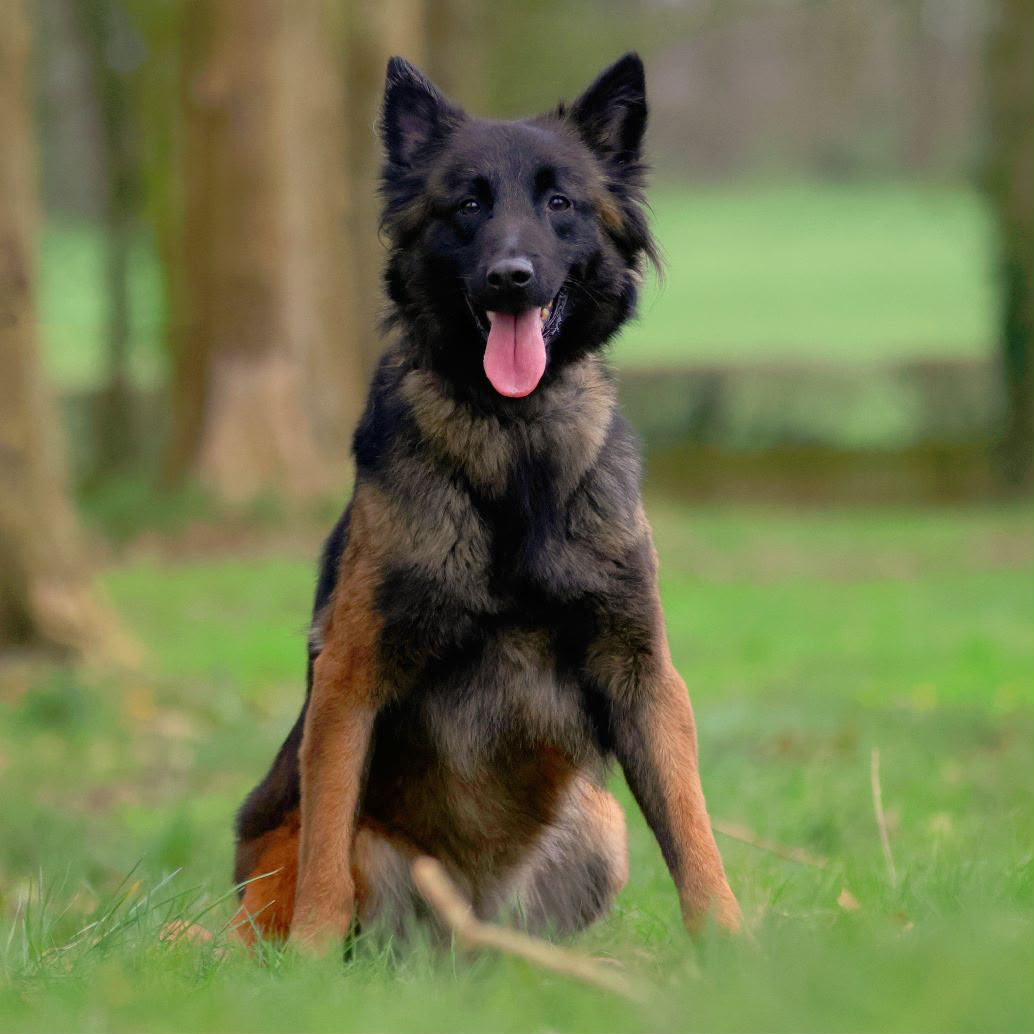
This is the one most private clients actually want. The dog does the school run, sleeps in the kitchen, meets your friends, and has trained behaviours that engage only on the handler's cue or in a genuinely defined situation.
Its defining quality is off switch. A dog that cannot settle in a busy family kitchen is not suitable, however impressive it looks on a bite sleeve. Selection for temperament happens long before any protection training starts.
The guard dog
Traditionally a property based deterrent, often working with less handler contact. The presence and the noise are the point. Historically these dogs were left on sites, which is a model that has largely and rightly fallen out of use.
The problem for a family enquirer is that a genuine guard dog's job description does not include being sociable, and dropping one into a household with children and visitors is where things go badly wrong.
The security dog
A working animal handled by a trained professional in a commercial context: sites, events, patrols. There is a whole framework around handler licensing and welfare, and the dog works as half of a team.
If you own a business and are thinking about site security, this is the category to ask about, and the conversation starts with the handler rather than the dog.
How to work out which you need
Answer these honestly and the category usually names itself:
- ●Will the dog live in your home with your family, or on a property?
- ●Who will handle it every single day, and do they want to?
- ●Is the concern personal safety, property, or a commercial site?
- ●Do you need the dog to be sociable with visitors and tradespeople?
- ●Are you prepared to maintain trained behaviours for the dog's whole life?
The deterrent nobody mentions
A large, visible, well behaved dog is a powerful deterrent on its own, and for a good proportion of enquirers that is genuinely enough. Combined with decent lighting, cameras and secure doors, a well trained family dog covers most of what people are actually worried about.
We say this to callers regularly, because we would rather place fewer dogs correctly than sell an escalation somebody does not need.
Legal responsibility does not change
Whichever category you choose, you are responsible for the dog's behaviour. Higher capability means higher expectation on your handling and containment. That is why we spend as long assessing the household as we do assessing the dog, and why the handover is a process rather than a delivery.
Questions to ask any supplier
Ask to see the dog in a normal environment, not only on a training field. Ask who bred it and what its temperament testing looked like. Ask what handover training is included, what ongoing support looks like, and what happens if the placement is not working after a month.
Ask what the dog does when a stranger walks past the gate, when a child runs past, and when it is at the vet. The answers to those three tell you more about the dog than any demonstration.
Be wary of anyone who leads with a video of bite work and cannot answer questions about the dog's life in a house. The bite is the easy part, and the ordinary behaviour is what you will live with every day.
Cost, and why the categories are priced differently
A family protection dog carries the highest cost because it needs everything a superb family dog needs plus the trained work on top, and the selection process rejects far more dogs than it accepts. You are paying for the ones that did not make it as much as the one that did.
Site and commercial security work is priced as a service rather than a purchase, because you are hiring a handler and dog team by the shift rather than buying an animal.
The cheapest options in this market are usually cheap for a reason: a dog with the bite work and none of the stability, sold with no handover and no aftercare. That is the version that ends up rehomed or worse within a year, and it is the version we spend a good deal of our time cleaning up after across Essex.
Need hands on help?
Tell us what you are actually worried about and we will tell you which category fits, including when the answer is no dog at all.
Three generations of the same family, over 8,000 dogs trained.
Common questions
Almost always a family protection dog, and quite often a well trained large family dog with no protection work at all.
It depends entirely on the individual dog's temperament and socialisation, and many are not suited to it.
Private ownership does not require a handler licence, but you carry full legal responsibility for control. Commercial security work is a different framework.
No. Temperament, stability and trainability matter more than size, and the wrong big dog is far worse than the right medium one.
Related guides
Looking for training near you? See our dog training areas, our protection dog areas, or all services.