Dog aggression towards strangers: what is really happening and what helps
Owners rarely ring us on the first growl. They ring after the lunge at the postman, or the moment a visitor pulled their hand back. If that is where you are, you are not a bad owner and your dog is not broken. Aggression towards strangers is common, understandable and, in most cases, improvable.
Almost all aggression towards strangers is fear or defensive distance seeking rather than dominance. Stop putting the dog in the situation while you work, manage access with a gate, lead or crate, and build the dog's confidence at a distance it can cope with. Never let strangers approach, offer food or reach over the dog's head. If there has been a bite, get professional help immediately rather than reading more.
What the behaviour is actually saying
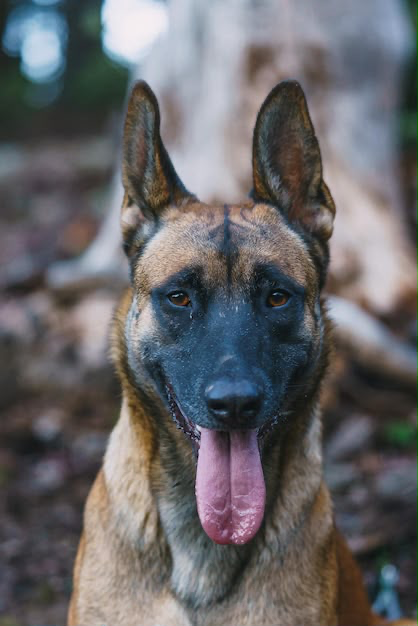
A dog that barks, lunges or snaps at a stranger is trying to create distance. The growl is the polite version, and owners who punish the growl usually end up with a dog that skips straight to the bite because the warning stopped working.
It looks like confidence because it is loud. Watch the body instead: weight shifted back, a tight mouth, whale eye, a stiff wagging tail held high. That is a worried dog making a lot of noise so the frightening thing goes away. And it works every time, because the visitor always does back off, which is exactly why the behaviour grows.
Safety first, and without apology
Before any training, put these in place today:
- ●A physical barrier for the front door: a baby gate, a closed hallway door, or the dog crated before you answer.
- ●A muzzle, introduced properly over a fortnight, if there is any bite history.
- ●A clear rule for visitors: no eye contact, no hand out, no talking to the dog. Say it out loud when they arrive.
- ●Distance on walks. Cross the road early rather than testing whether today is a good day.
- ●Tell your insurer and your vet, and ask the vet to check for pain, because pain lowers every dog's tolerance.
The training, in plain terms
The work is counter conditioning at a distance the dog can handle. You find the distance where your dog notices a stranger but can still eat, still hear you and still move. At that distance, every appearance of a person predicts something excellent from you. Over many repetitions the dog stops rehearsing the threat response and starts checking in with you instead.
Progress is measured in metres, not in weeks. If your dog could cope at thirty metres in March and copes at twelve metres in May, that is a serious result even though it does not feel dramatic.
What makes it worse
Three things reliably set owners back. Forcing greetings, because a dog that is made to accept a hand learns that you will not protect it. Punishing the growl, because you remove the warning and keep the feeling. And flooding, which is taking the dog to a busy place in the hope it will get used to it, which usually confirms to the dog that the world is as bad as it feared.
The fourth, quieter one is inconsistency. A dog that is protected on nine walks and ambushed on the tenth stays vigilant, because vigilance keeps paying off.
The realistic outcome
Most dogs in this category become manageable and comfortable rather than sociable. The goal is a dog that walks past strangers calmly and settles when visitors are in the house, not a dog that greets everyone at the door. Chasing sociability is how people push too hard and lose the ground they gained.
Some households need to accept a permanent management layer: the gate stays, the muzzle stays for vet visits, and that is a good life for the dog rather than a failure.
When to call somebody in
Call immediately if teeth have touched skin, if the behaviour is escalating month on month, if there are children in the house, or if you have started avoiding walks. In Harlow and across Essex we assess in the home, because the front door and the local street are where the behaviour actually lives and a training hall tells us nothing useful.
Need hands on help?
If your dog has warned or bitten a stranger, ring us and describe it honestly. We assess in your home across Harlow and Essex and tell you what is realistic.
Three generations of the same family, over 8,000 dogs trained.
Common questions
Usually it is protecting itself and finds you a useful anchor. The label matters because the plan for fear and the plan for genuine trained protection are completely different.
Not when it is introduced slowly and paired with good things. A relaxed muzzled dog is safer, and safer owners are calmer, which the dog reads.
It can very often be improved a great deal and made safe. Honest trainers talk about management plus improvement rather than a cure.
That is a last conversation, not a first one. Get a proper in person assessment before making any decision that size.
Related guides
Looking for training near you? See our dog training areas, our protection dog areas, or all services.